By late afternoon, my sister didn't want to do anything at all, which seemed weird to me — why come to the Dells and then just do nothing? Sure, it was pouring rain, but for true tourists, that's no excuse.
So I left my sister to snooze in the car and trudged off to the studio museum of the photographer Henry Hamilton Bennett, located right in the center of Wisconsin Dells. In the studio, I bought a ticket for $7 and walked through a door that can only be opened from the outside with the clerk's key, but from the inside with a simple handle.
Inside, large photos were waiting for me on the walls and stands. Walking a bit further, I saw a well-preserved older guy of medium build, wearing glasses and a beard. He was telling a couple with a 5-year-old girl all about the history of the studio in great detail. Catching sight of me, he asked if I wanted to join them. At my hesitant "maybe," he just chuckled ironically. A logical reaction, really, but how was he supposed to know that with my English, I could barely understand half of what he was saying, even when straining all my mental faculties. Still, I decided not to offend the old dude and, together with the other two visitors, started listening to him carefully, especially since his storytelling was very smooth and engaging.
Anyway, Henry Bennett was born in Canada in 1843 and became famous mainly for his photos of the Dells and the Wisconsin River, as well as his 3D photos, also known as stereoscopic.
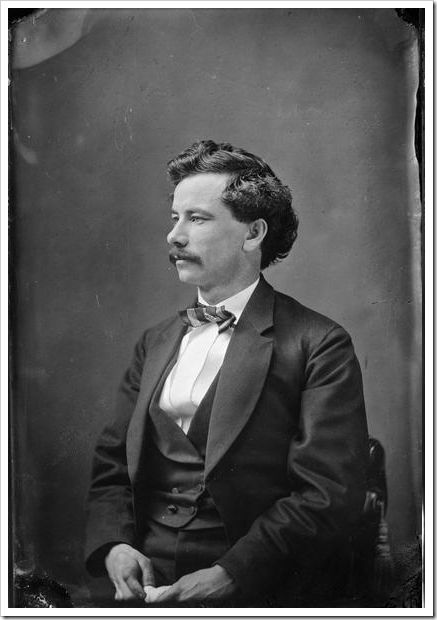
H.H. Bennett. All the photos below link to the galleries they were taken from
At first, Henry worked as a carpenter, but during the Civil War, he accidentally shot himself. Because of the wound (I think he was missing a few fingers), he couldn't stick to his profession, so he became a photographer. Because hardly anyone in the Dells needed portrait photos, he started shooting landscapes. Thus, from a rather unfortunate set of circumstances came a highly fortunate result. The thing is, the author's landscapes eventually brought him fame and money, and most importantly — they glorified Wisconsin Dells as a tourist destination, essentially making it a hub of tourism.
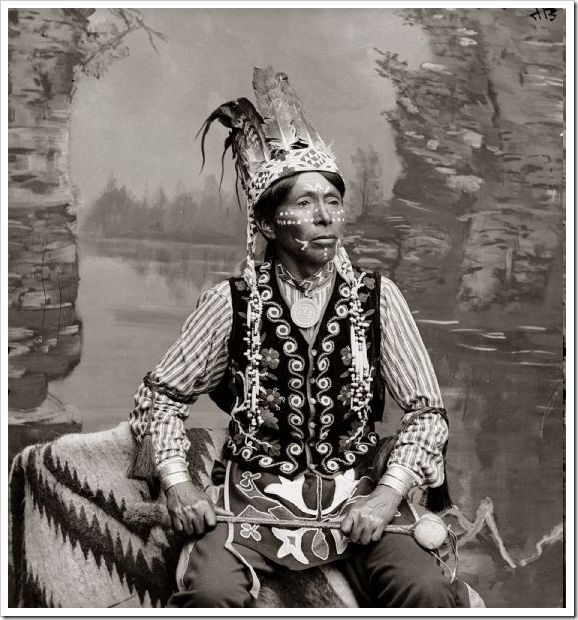
This is a Ho-Chunk Native American, the ones I wrote about
But all that was yet to come: Bennett's career didn't start out so rosy, since photos weren't cheap and not everyone needed them. When he realized that landscapes with cliffs and rocks looked boring and dull in photos, he got into 3D pics. By the 1870s, stereoscopic photos had become incredibly popular and were owned by many wealthy families, even outside of Wisconsin. They worked much like modern ones, with the only difference being that the viewing glasses looked pretty bulky and resembled more of a scuba mask with a wooden frame. In 1875, thanks to a sponsor, the photographer built his studio. To stay financially afloat, he started selling postcards there, even though he was against it, considering it a lowbrow pursuit. He and the sponsor later became such great friends that he promised never to sell the studio to anyone.
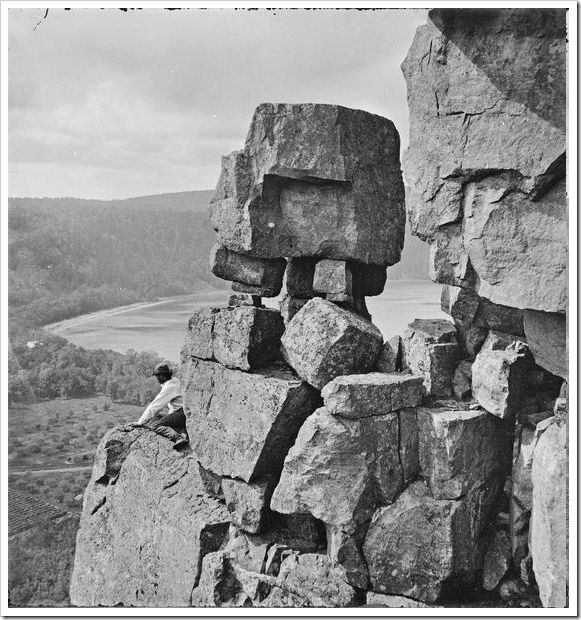
In the distance is Devil's Lake, the very one we rode around on the Dells Army Ducks
Bennett was a major innovator in the photography biz. He invented the high-speed shutter, which made it possible to shoot action scenes; before that, subjects had to hold still for several minutes. Bennett and his son floated over a hundred miles on a raft with raftsmen, photographing every aspect of their tough and dangerous work. The resulting story was the first time photographs were used to tell a cohesive narrative and ultimately gave birth to photojournalism. Bennett also invented a few other handy mechanisms for photographers, the technical details of which are of no interest to us.
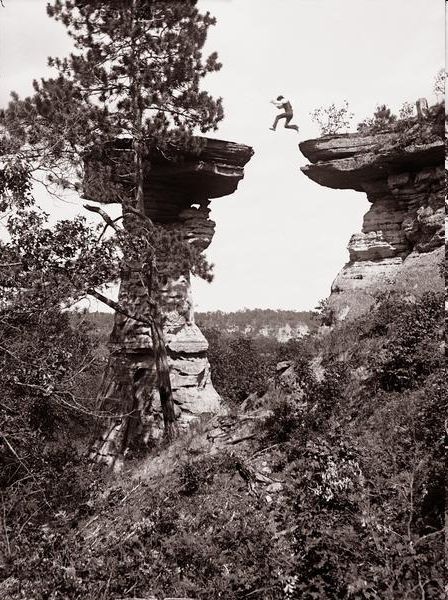
Bennett's son, shot using that very same high-speed shutter
In 1890, the popularity of Bennett's photos began to wane, as tourists started snapping shots with their own portable cameras, which had appeared by then, even though they were complex, bulky devices that demanded knowledge and skill to operate. The photographer didn't give up and kept at it, although he did cave to commercialization by starting to sell other souvenirs in his studio too. After the master's death in 1908, his wife carried on the business. The master's heirs continued the family business all the way until 1999, when they finally yielded to the passage of time. The studio was handed over to the Wisconsin Historical Society, which restored it, filled it with photographs, and turned it into a museum complete with the inevitable gift shop. Thus, Bennett and his descendants kept their word not to sell the family property, as the studio was donated to be preserved as a historical treasure.
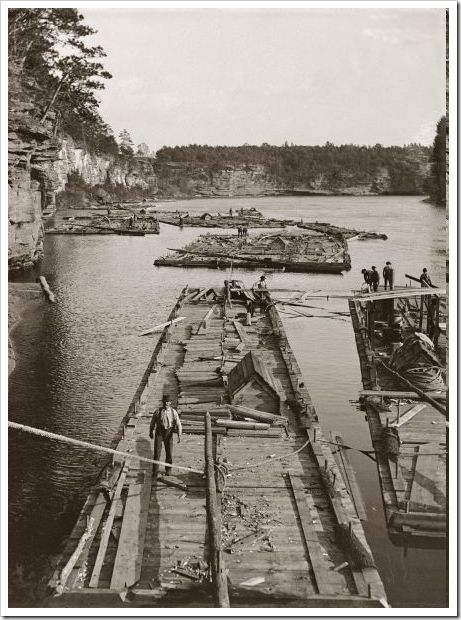
Raftsmen
I liked Bennett's photos, especially the 3D panoramas viewed through the original wooden glasses. There were also PCs with the same kind of gizmo, but my eyes got way more tired from them. If you don't mind the fact that the studio isn't packed with the usual American wonders and surprises, then it's totally worth it. For photography lovers — which I am not — it's an absolute must-visit; Bennett is considered a great classic, and his photos can be seen in many museums around the world. As for me, I lucked out — I was entertained by the guide's talented storytelling.
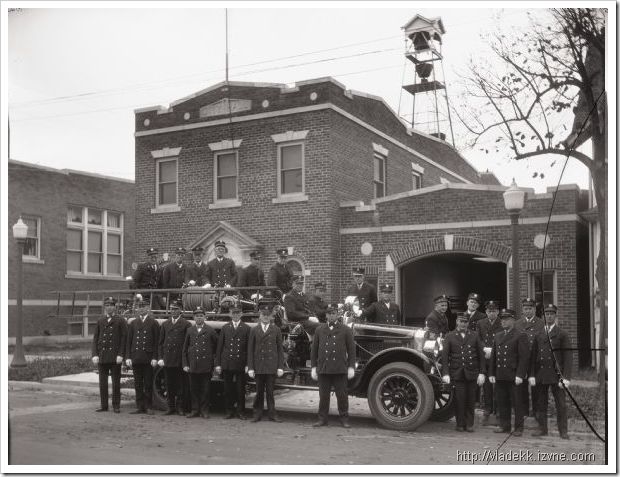
By the way, when the guy tried to give the guide some money after the tour, he replied: “If you want to spend your money, better put in a can at counter. I’m retired, I don’t need the money, I’d better see this place keep running”. It looked and sounded like a scene from some Western, such choppy phrases. What it means is: "If you really want to spend your money, put it in the jar on the counter. I'm retired and don't need it, I'd rather see the museum stay open." That last sentence exceeded my modest translation skills. By the way, thanks to my Soviet mentality, the thought of tipping a knowledgeable guy who had been talking his head off for us for over 40 minutes never even crossed my mind. I don't know whether to be happy about that or sad, if you know what I mean.
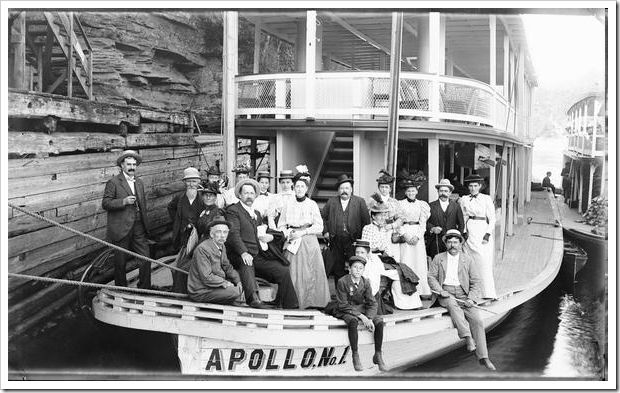
Americans of past eras are far more likable than current ones
Bennett's photos, printed directly from the silver negatives no less, can be bought in the museum shop or on the website, but the prices aren't exactly thrilling. And when it comes to digital copies and the rights to them, it's the sheer horror that Lessig warned about. The copyright for some of the photos belongs to who-knows-whom, so using them is risky. And the ones owned by the Historical Society that runs the museum come with draconian conditions: you can only use them for some "commercial purposes," but printing shots yourself for you and your friends is forbidden! At the same time, the price isn't actually that high for commercial enterprises — $22 — but it's unaffordable for amateurs. Then again, as I already mentioned, they are forbidden from using the digital photos anyway.
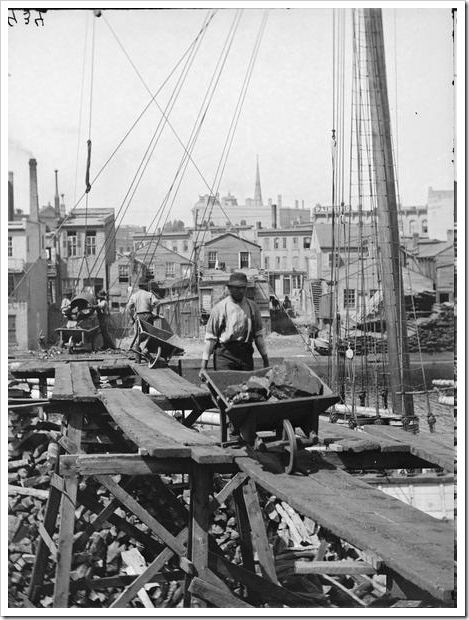
Coal is still needed, but not for long — the age of oil is coming
I shudder to think what awaits Latvia once it gets the money to fight the piracy that reigns there right now. The only hope lies with the hackers currently building anonymized P2P networks. But then again, those can be outlawed too, and besides, 99% of rare cultural heritage isn't even on P2P networks anyway. As a result, instead of multiplying infinitely in bits, it just rots in the basements of greedy "societies" like this one, who fail to grasp that in the Diamond Age, the only way to preserve heritage is by distributing it to anyone who wants it, not by locking it away behind seven seals. So, copyright law reform is the number one priority for the flourishing of culture, and let's hope we live to see it.


